
Against Impossibility
On Nettspend, Jordan Wolfson, Cy Twomby, and the crisis of cultural vacuity

This thing, that hath a code and not a core,
Hath set acquaintance where might be affections,
And nothing now
Disturbeth his reflections.1
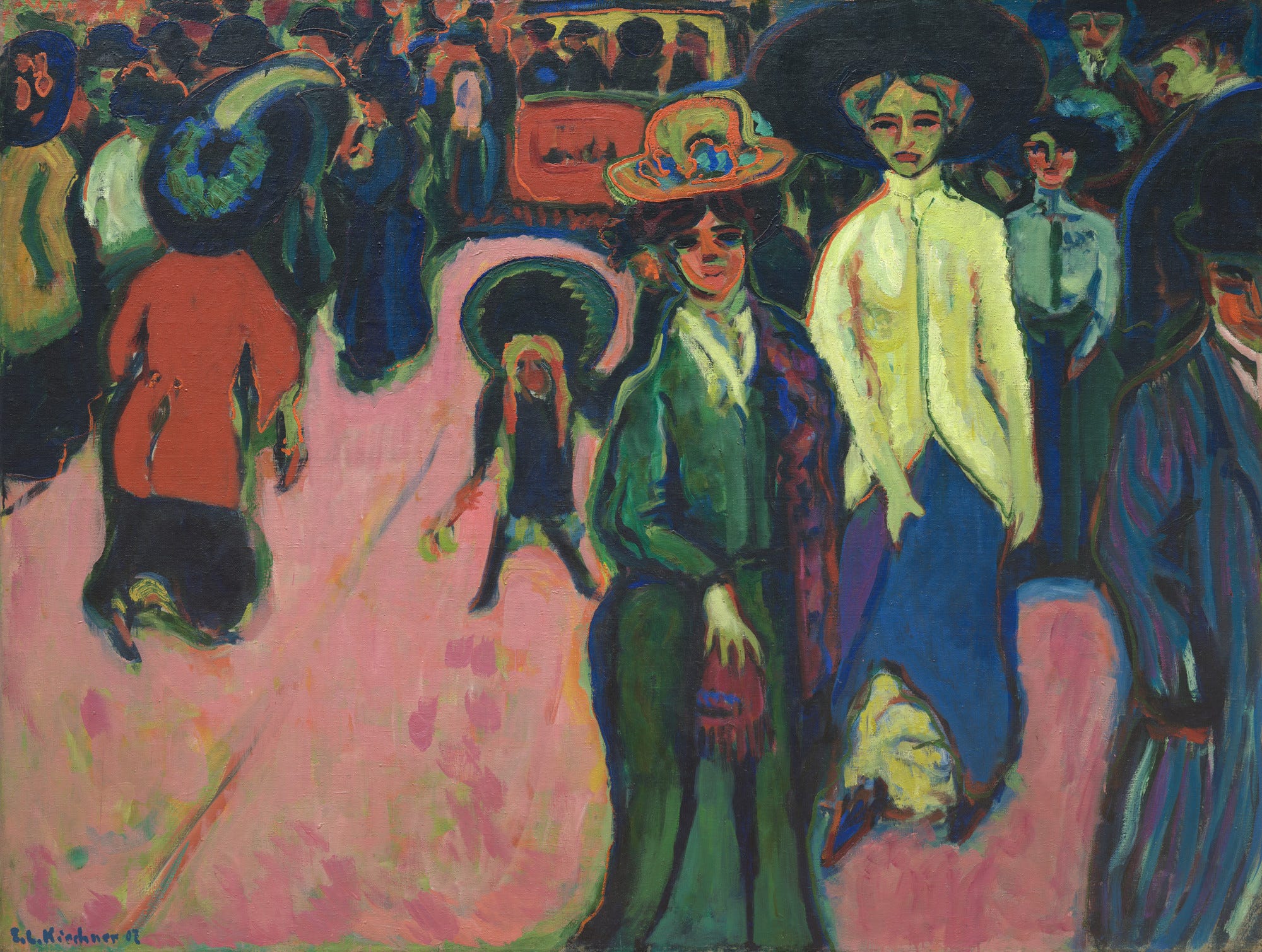
Is there anything left to be said? Magazines and editorials abound today with proclamations of the death of fine art and high culture. Where has the avant-garde gone? Clement Greenberg writing near the end of his life spoke in despair of the total subsumption of art into pop, the long-awaited merger of art and life realized through Jeff Koons and so many children of Warhol. Today it seems one can observe this tendency within its terminal phase, with culture increasingly finding itself subjugated to the whims and reproduction of the technological. What is the nature of the logic within such production? It is, in a word, vacuity, and the production of vacuity’s vortex of meaninglessness. Vacuity can’t just be just another insult, rather, vacuity has to be understood as the essential framework for the crisis of emptiness within contemporary art. Vacuity is a structuring of cultural and social relations, and commands not just what we see and consume but how we see and consume. Art and culture are in a period of instability, and the question of what this instability has its roots in is of the utmost importance. A vacuous culture, a meaningless culture, poses a threat not just to the world of art but the whole of our sociality and understanding of the world.
The teenage rap star Nettspend can serve us well as an object of analysis in understanding the logic of vacuity. Nettspend embodies a specific method of artistic production today, one that poses a particularly worrying implication for culture in that it does not mean, or say, anything. If the culture we participate and find ourselves in cannot say anything, what can we say? To assert Nettspend as the product of vacuity is to assert that Nettspend is the product of vacuity. Vacuity is a cultural paradigm, one that enforces an involuntary, violent form of transience in service of a perpetual lack of substance. There is a violence at work within the logic underlying Nettspend, a violence that directs itself against the spectator through active emptiness — a black hole. Nick Land says that:
Dark energy is tearing the cosmos apart. Eventually its pieces will mutually depart from each others’ light-cones. They will then be nothing to each other ever again.2
And Tiqqun says that:
The Young-Girl's way of being is to be nothing […] The Young-Girl is ontologically a virgin, untouched by any experience […] Considered in herself, the Young-Girl expresses nothing.3
What’s the conjunction here? It’s clear both Land and Tiqqun are trying to conceptualize the essence of nothingness as an active and relational force. The extent to which Nettspend epitomizes Tiqqun’s Young-Girl and as such the logic of Nothingness within the realm of culture and ontology can’t be understated. Nettspend is the pure Young-Girl, only ever the Young-Girl, never anything but the Young-Girl. If Nettspend, as the Young-Girl, expresses Nothing, then the consumption of Nettspend, the participation within the “space” conferred by Nettspend, is the participation within and consumption of Nothing, and Nothing is tearing the cosmos apart. The gaze within the consumptive process of Nettspend is always fixed on the production of two things: a barren, speculative form of relationality, or, in other words, the relationality of the Young-Girl, and the continuation and conferring of technological relations, or Heidegger’s Gestell (Enframing) upon the sphere of the social. The gaze towards Nettspend, and the deep vacuity he represents, can only ever be a gaze, never a participation, as is implicit within the ontology of Nothingness that defines the Young-Girl, and the epistemology of technology which shapes and limits the extent of our social being. With these in unison, we find that a process of production occurs wherein the object produced can never be anything of substance — there is no-thing within Nettspend or the gaze towards him. The object of this production is only ever an object, only ever pure reproducibility, only ever perpetual availability. Such an object cannot have a meaning or value beyond an indistinguishability from any other object, and such an object can never be more than an object. It, simply put,
does not yet possess itself in its own shape as in its own end, but exists simply in the mode of availability, of being useful for.4
There is only usefulness in Nettspend and the method of cultural production from which he arises, there is only a permanent, purely utilitarian mode of speculative “gazing.” Our current way of understanding, relating to, and creating culture is so removed from any sense of urgency or vitality that the very act of cultural consumption increasingly takes on the characteristic of self-harm. All, it seems, that we can do now is gaze towards extinction.
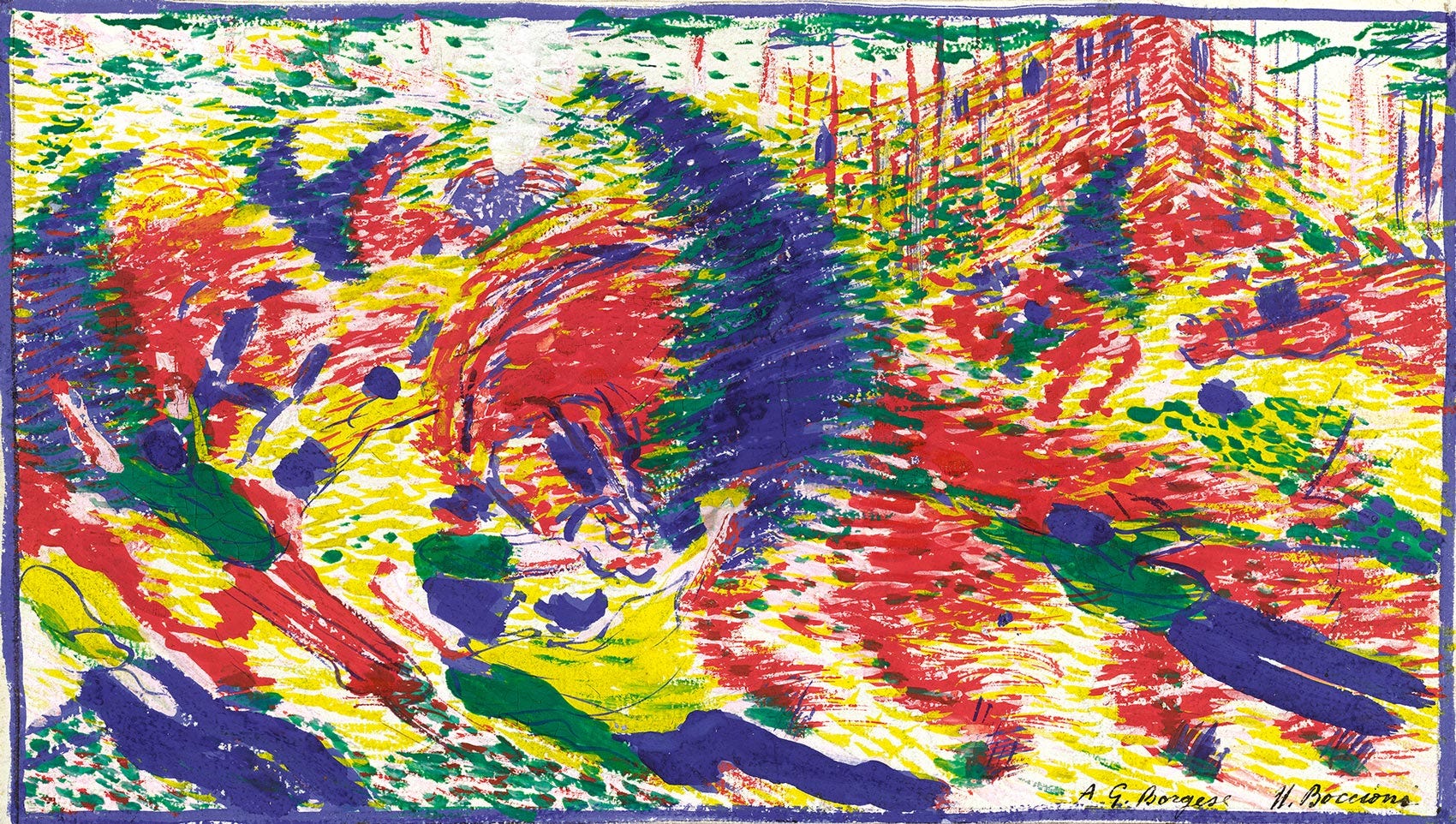
Circulating Nettspend and similar cultural objects is easy. The ability to circulate is inherent in vacuous objects, and comprises their most defining feature. Vacuous objects are slaves to distribution. The most fundamental trait of contemporary cultural vacuity is the ability to be interchangeable, unimportant, universal, useful, easy — reproducible. Nettspend is perfectly reproducible. It’s worth noting that most of Nettspend’s songs are two minutes or less. It’s also worth noting that in his interview with GQ, we learn that:
I ask Nett what kind of music he’s been listening to, and he tells me he needs to check on his phone.5
Nettspend’s extreme short-form music is not an experimental or provocative choice, nor is his inability to recall the music he enjoys without technology an accident. Rather, what Nettspend is demonstrating is the most essential characteristic of the vacuity which defines nothingness: the impossibility of actual existence. Vacuity can only ever defer and be immediately ready to defer, vacuity can only ever “become,” never “be.” As such, vacuity can never really exist. Vacuity produces nothingness not in the sense of not producing anything but in presenting to us a non-existence, a lack of existence. Nothingness is perpetual availability — a purely and entirely utilitarian universal cog for any and all machines. If one were to ask what “defines” Nettspend as an artist, one could only reply with emptiness, in both interpretation and form, with the very act of describing Nettspend and his vacuity eluding possibility in the face of a pure gaze of desolation. Our difficulty in speaking of Nothingness can reveal to us a root of contemporary cultural dissatisfaction — the lack of ability to say something, the inability for words or actions to have meaning. We can no longer say anything it seems, as to say something would be in direct opposition to the demands of a culture inheriting its logic primarily from relations imposed upon us from technology. Cultural production now presents itself to us as pure aesthetic production, in contrast to the poetic production of Heidegger, elucidated by Agamben:
Wherever a work of art is produced and exhibited today, its energetic aspect, that is, the being-at-work of the work, is erased to make room for its character as a stimulant of the aesthetic sentiment, as mere support of aesthetic enjoyment. In the work of art, in other words, the dynamic character of its availability for aesthetic enjoyment obscures the energetic character of its final station in its own shape. If this is true, then even the work of art, in the dimension of aesthetics, has, like the product of technics, the character of availability for . . . , and the split in the unitary status of man’s productive ability marks in reality his passage from […] being-at-work to mere potentiality.6
Agamben’s conception of aesthetics is the realm of the purely sensory, one that does not enable an understanding beyond a mere reception and sorting of visual information, an understanding that is “vacuous” insofar as it rejects a deeper probing of substance. Our contemporary cultural logic is trapped within this sensory-driven domain, ruled by the demand of vacuity for perpetual availability. In such a culture our ability to find ourselves becomes increasingly difficult as our cultural output struggles to find itself. If cultural output can never truly be within itself we, by extension, can never truly be within ourselves. Contemporary culture has increasingly taken on the characteristic of perpetual alienation of the human from creative realization beyond the boundaries of technology, which imposes itself upon the sphere of artistic production as a limitation, an organization of the expenditure inherent within artistic production into a neatly classified taxonomy of stored energy. This stored energy can only ever find its value in future usage, just as the energy of the standing-reserve can only be directed towards the furthering of something else:
Yet that expediting is always itself directed from the beginning toward furthering something else, i.e., toward driving on to the maximum yield at the minimum expense.7
Meaning isn’t present in such a system. In fact, all measures must be taken within such a system to ensure distance from the artwork through transforming the encounter with the work of art into a site of a disengaged spectatorship. It is only when we disinvest ourselves from experiencing an artwork that we begin to enjoy it as a solely aesthetic object; it is only when we enter the realm of spectatorship that we can disinvest from the artistic encounter and enter the realm of entertainment. Disinvestment is predicated on the ability of the spectator to distance themselves from any ontological character of culture and situate the aesthetic experience as a fundamentally and self-consciously repressive act, a voluntary rupture with oneself. This disinvestment is inherently tied to technology’s ability to transmit information from anywhere in the world to our localized and specific site at any time. Günther Anders tells us:
[…] we can participate at a distance in any event, that is, without incurring any danger and remaining invulnerable; with the privilege to use it as enjoyment and entertainment. 8
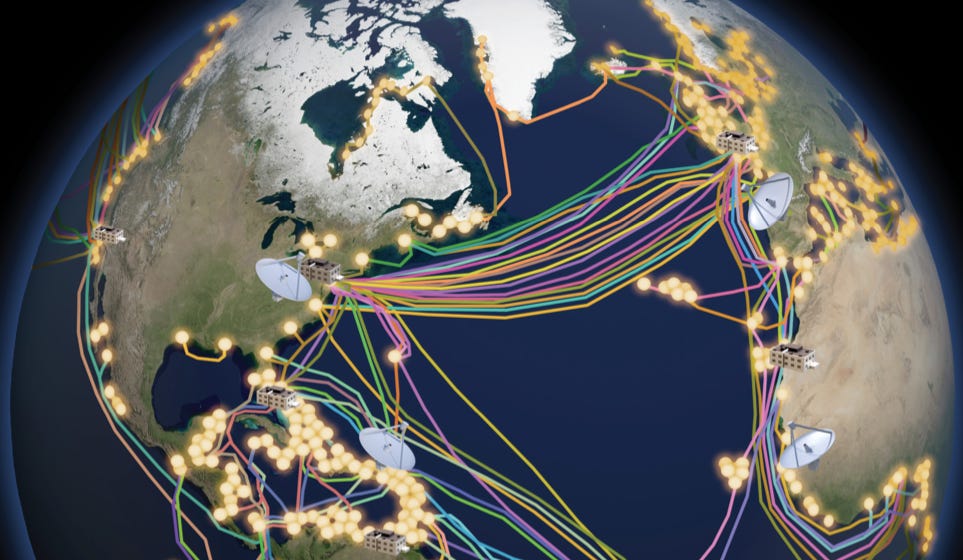
When this is translated to the field of culture, the artwork finds itself increasingly burdened by the demand inherent in technology to decouple from specificity, location, and time, into the realm of non-spatialized generality, undefinable and empty. Technology enables a distancing in such a way that exerts pressure upon culture to follow behind it, severing the linkage between art, historicity, and life. Because technology’s relation to understanding is predicated on a lack of spatiality and decoupling from substance, any artwork generated along these same lines will always imitate and reproduce such a logic, forever bound to a mimesis along the lines of machines. And aesthetics must, for technological vacuity to continue, be a perpetuation of emptiness, not just as a logic of production, but as a fundamental way of understanding our nature as humans. There can be no truth to be shown, no story to be told, no great gesture to be made, no outrage to be generated, only a hollow sense of enjoyment, forever. And it’s this very enjoyment that enables our willful participation within the self-repression of authenticity, bringing the perpetual availability of the standing-reserve into the realm of our social being. Owing to this, our cultural relations are, to a large extent, constrained and defined by a perpetual detachment from reality and, in the classical Freudian sense, negation. Our encounter with the work of art must be decoupled from vitality and shifted towards the aesthetic gaze, forever looking towards and never looking from, in order to ensure universal accessibility. In Freud’s Negation we come to understand the way in which something can be simultaneously be brought into our conscious thoughts while remaining concealed in its essence:
Thus the content of a repressed image or idea can make its way into consciousness, on condition that it is negated. Negation is a way of taking cognizance of what is repressed; indeed it is already a lifting of the repression, though not, of course, an acceptance of what is repressed.9
What occurs during the act of negation plays itself out in much of our contemporary relation to art as the true content of a work, its meaning, is obscured behind the demand for availability, led by our self-initiated detachment from any engagement with the work of art beyond mere enjoyment. We negate the possibility of truth and meaning within the work of art when we divest ourselves from it and enter the realm of spectatorship where, as in negation, only the image, or aesthetic qualities of a work can reach us, with its core and essential nature remaining concealed, negated, recognized but unaccepted, only ever being received as an object of enjoyment. To understand and relate to culture in such a way is to nullify its ontological and mimetic functions in service of technology’s way of revealing and its insistence on permanent availability. Vacuity has no core comprising its truth, because its only function is as an interchangeable unit of pleasure. As such, when we enter the detached and uninterested space of the spectator we keep the reality of an artwork concealed, turning its site into a space of self-repression through negation, allowing only its most surface characteristics to reach us while denying any experience beyond the pleasurable, ensuring the containment of existence within the boundaries drawn by technology and its epistemology.
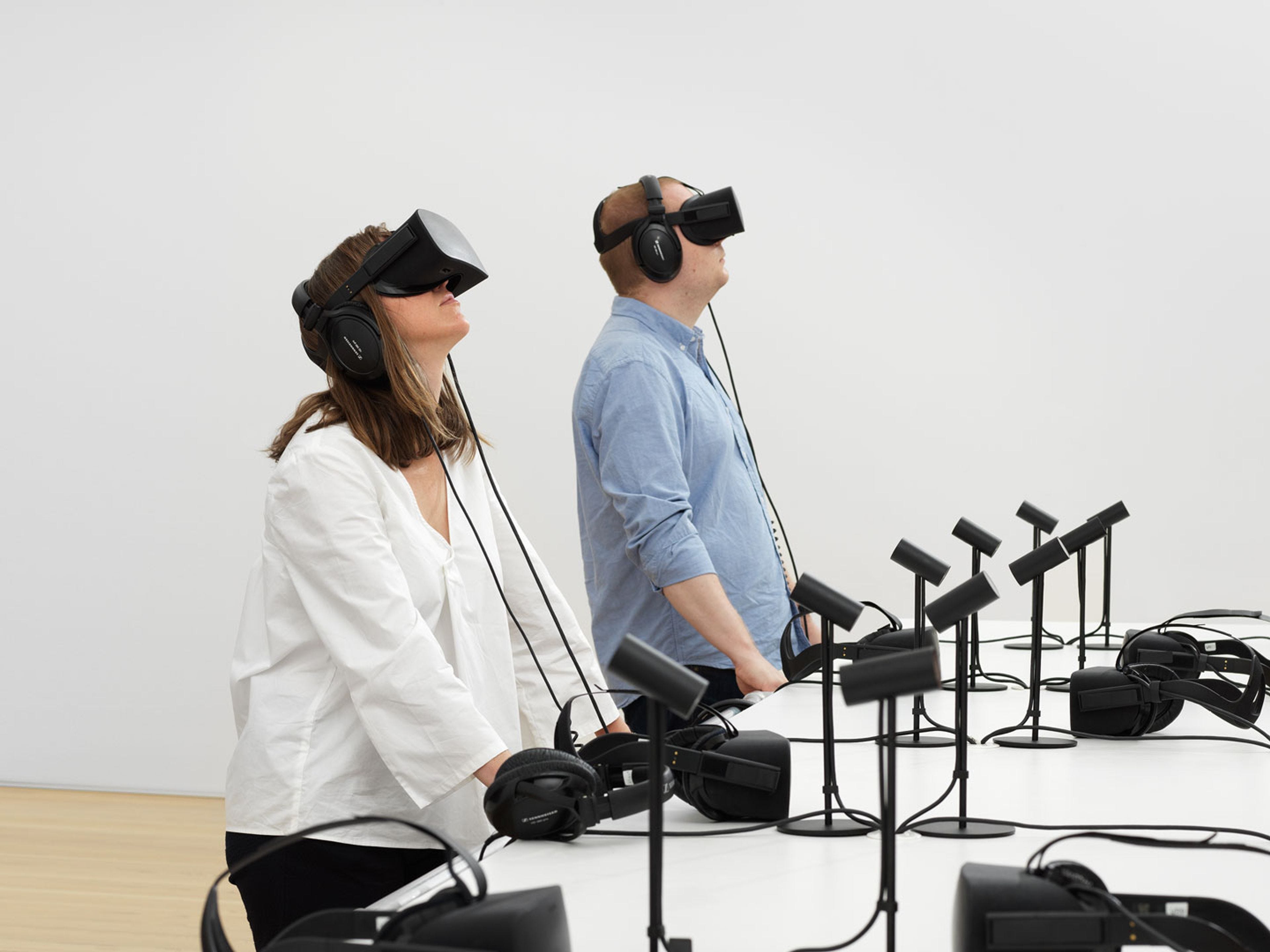
In Jordan Wolfson’s Real Violence, the relation between spectatorship, technology, the work of art and violence is perfectly visualized. Per Wolfson, in reference to a separate piece (Colored Sculpture):
This is real abuse - not a simulation.
The violence in Real Violence is real, no doubt, yet our encounter with it can only ever be anything but. Mediated by technology, the reality of violence becomes something detached from us, in a quite literal sense, as we witness it from the removed vantage point of the spectator. It’s crucial to emphasize the distance from violence in the relationship between the viewer and artwork within the piece. When we look at the violence in Real Violence we are only ever looking at the violence. The violence of Real Violence can only ever be seen, never felt or really confronted. Because of this, we negate the violence by containing it within the realm of aesthetics, excluding it from our reality and life, and organizing it along lines inherited from technology’s epistemology. While the visual contents of the work can reach us the more essential qualities of the work evade us, mirroring the way in which much of contemporary art is understood only as an aesthetic or visual phenomenon, rather than a real and urgent extension of life. It is only because we detach from Real Violence that we are able to understand it as a mere aesthetic experience, and it is only because our encounter with the violence is mediated through technology that we are able to detach from it. This is what it means to use technology as an epistemology. In Real Violence, the audience is guided by way of technology towards a dissociation from reality in service of a suspension of life under the reign of negation and spectatorship. Any authentic revealing is prematurely made impossible under this relation, ensuring the continuation of universal permanent availability and the concealment of truth under vacuity. Violence has to be made vacuous and meaningless, as is demonstrated in Real Violence, for it to be interchangeable. If violence was to have a meaning it would no longer be interchangeable, no longer able to be contained within the standing-reserve and affixed to the needs of technology. One can think of Baudrillard’s remarks on death here:
To be dead is an unthinkable anomaly; nothing else is as offensive as this. Death is a delinquency, and an incurable deviancy. The dead are no longer inflicted on any place or space-time, they can find no resting place […].10
Our engagement with violence in the space of art must be permanently refused via negation and kept distant from us, as a mere object of speculative disinterest, in order for our receiving of its contents as something meaningless and empty, and therefore, interchangeable. Our encounter with any artwork’s content — even that of violence — must remain disengaged in order to perpetuate a safe exchangeability. For us to encounter the work of art as something containing an essential and real truth, a purpose, would be to brush against the disinvestment inherent in our mediation of art through the gaze of technology. In the service of such we consciously raise the image of an artwork’s content while simultaneously keeping it unengaged, permanently trapped within the maze of negation. The way we look at and understand the information presented to us within a work of art is inextricably tied to the way in which technology chooses to give such information to us, and that way necessitates negation. Just like in Real Violence, the very act of seeing the content of a work is impossible to divorce from its technological method of reception, meaning our understanding of the work is always wedded to the technological and its limitations and demands. Technology demands universality, vacuity, meaninglessness, and interchangeability, all things, which, when applied to the sphere of culture, form an epistemological basis for our ontological formation entirely divorced from any ability to organically and authentically come into our own being. Our methods of producing knowledge, of fundamentally understanding ourselves in relation to historicity and the world, are degraded and subjugated under the law of transient availability. To understand anything at all, it would seem, is rapidly becoming an impossibility. Technology does not provide us with an authentic understanding, it provides us with the understanding that technology has. We do not understand the work of art as it truly is but as it is presented to us within the relations drawn for it by technology, leaving our encounter with the work of art always veiled behind the technological curtain constructed for it. Our participation in culture, and our understanding of it, becomes vacuous and empty when it takes on the character of replicating the inorganic logic of machinery which continuously works to ensure that the of truth of art is organized in such a way that it is fundamentally imperceptible and invisible to the human, as,
[…] enframing does not simply endanger man in his relationship to himself and to everything that is. As a destining, it banishes man into the kind of revealing that is an ordering. Where this ordering holds sway, it drives out every other possibility of revealing. Above all, enframing conceals that revealing which, in the sense of poiesis, lets what presences come forth into appearance.11
Heidegger’s explication here demonstrates not just how technology shows us meaning in a way that, paradoxically, subjugates it to meaninglessness through confinement within the standing-reserve, but also how the ordering of presence within technology’s way of revealing fundamentally alters the way in which humanity comes to grasp its own way of revealing. Technology molds our culture into an image of itself, and, in doing so, reshapes human consciousness in such a way favorable to it. Heidegger, writing again, notes:
As soon as what is unconcealed no longer concerns man even as object, but exclusively as standing-reserve, and man in the midst of objectlessness is nothing but the orderer of the standing-reserve, then he comes to the very brink of a precipitous fall; that is, he comes to the point where he himself will have to be taken as standing-reserve.12
Technology’s transitory and interchangeable way of revealing extends across the sphere of culture in such a way that slowly culminates in the destruction of mankind’s poetic dwelling under the impersonal regime of endless classification and ordering. Culture is, above all, mimetic, and when the demands of the standing-reserve are transmitted forward through culture, when our culture seeks nothing else other than transience, the nature of human existence is invariably forged and recreated by it, becoming transient and interchangeable itself. Forgetting is the nature of transience, and transience is the essence of nihilism. When cultural production becomes the production of transience it becomes the production of nihilism, concluding with the violent departure of the human from authentic being within time, space, and life, a forceful forgetting — the subject under Enframing can only ever be an amnesiac. Technology dismantles the possibility of an ontological referent in sociocultural relations through dispossessing the work of art in its essence, leaving the work of art, and the human who seeks to dwell with it, homeless. We can find no reference within a work coerced into permanent availability other than a replication in our lives of this same logic, leaving us unable to situate ourselves within any sense of truth or purpose beyond an self-inflicted annihilation of our existence. Agamben terms the contemporary status of art a “self-annihilating nothing,” cutting humanity off from access our ability to truly be within our world through culture:
At the extreme point of its metaphysical destiny, art, now a nihilistic power, a ‘self-annihilating nothing,’ wanders in the desert of terra aesthetica and eternally circles the split that cuts through it. Its alienation is the fundamental alienation, since it points to the alienation of nothing less than man’s original historical space. In the work of art man risks losing not simply a piece of cultural wealth, however precious, and not even the privileged expression of his creative energy: it is the very space of his world, in which and only in which he can find himself as man and as being capable of action and knowledge.13
Humanity increasingly encounters art through a space of distance and separation from culture as a site of life, finding itself unable to understand anything other than the technological. The negation mentioned previously plays a decisive role in this, permanently disengaging us from embracing the work of art as a lived continuation of our truth in favor of shallow, technologically-bound pleasure. Through our negation of the work of art we secure the impossibility of its existence as anything other than a purely distant thought in our mind, merely something recognized but never embodied or understood, permanently concealed behind self-repression. We find ourselves alienated from cultural realization in the most structural sense, endlessly coerced into the replication and expansion of the domain of technology across wider and wider margins of life. The degree to which we find ourselves able to engage the cultural as a site of social and historical being, our ability to place ourselves within both community and individuation, and our capacity for poetic dwelling upon the Earth are under besiegement by the force of exchangeable utility. What does life look like in a world absent the conditions for existence?
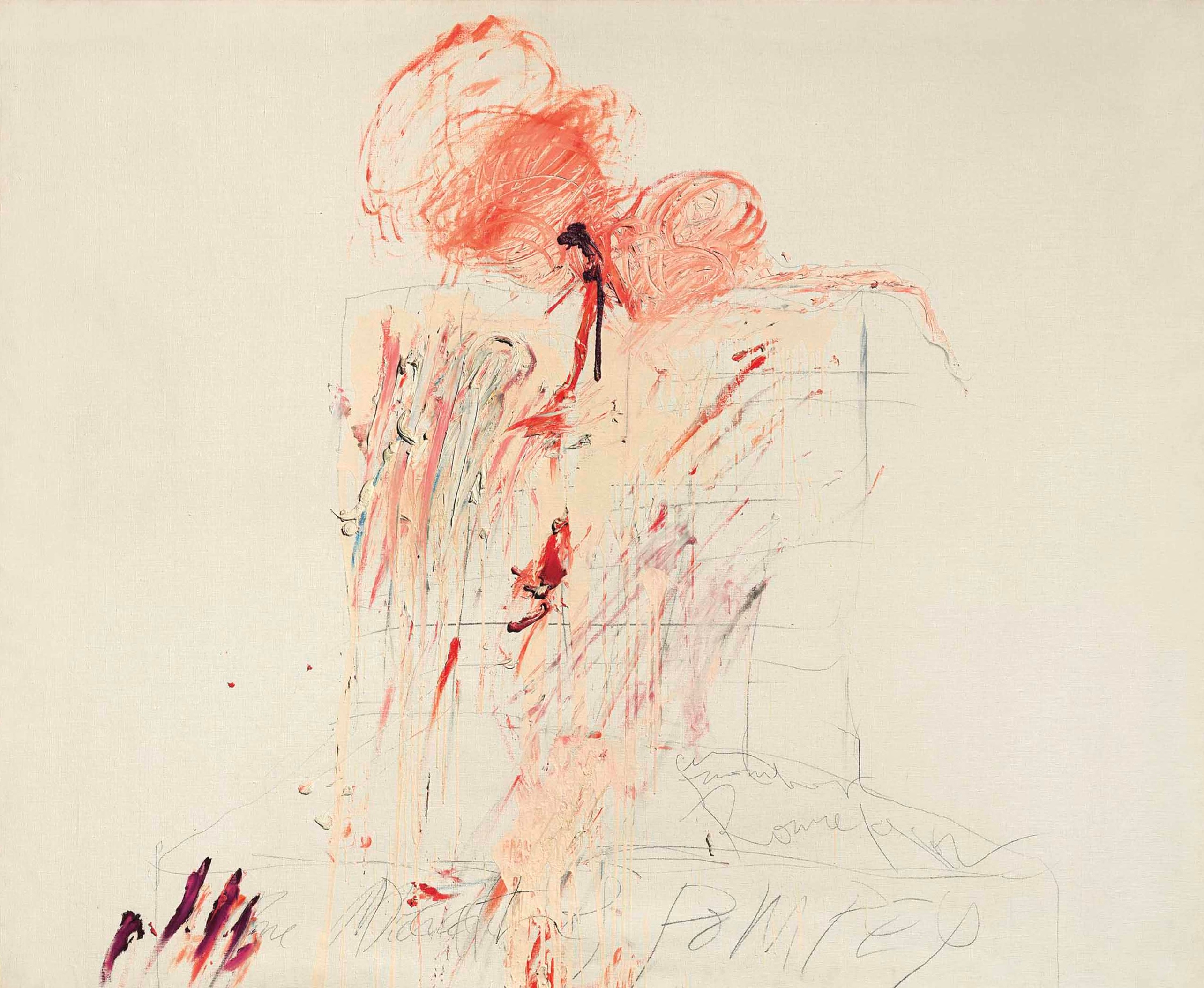
Contemporary man finds himself facing an abyss. With the status of the artwork as a space for an encounter with truth ruptured, our way of forming social relations increasingly takes on the character of technology’s perpetual demand for availability, endangering our capacity for meaning and purpose. Life under the standing reserve is the absence of existence. Like in Twombly’s Death of Pompey (Rome), the absence of being can be visualized as the abstraction of original form into a pure interplay of colors, a forgetting of the original shape of a thing behind the cloud of visuality. In Pompey, the site of the city can no longer really be said to exist, merely its abstruse visual attributes wandering without home, history, or form. Pompey, like our being in relation to the work of art, is solely an encounter with phantoms, with silhouettes of subjects brought to cognition yet instantly negated and repressed in its true essence. Pompey, like us, hides behind shadows and smoke, attempting to remain within the simplicity of concealment. But all things must come to light eventually, and all roads still lead to Rome.
Ezra Pound, “An Object”
Nick Land, “Disintegration,” Jacobite (2019)
Tiqqun, Tiqqun (1999)
Giorgio Agamben, The Man Without Content (1970)
Eileen Cartter, “Nettspend Grows Up,“ GQ (2025)
Agamben, The Man Without Content
Martin Heidegger, “The Question Concerning Technology” (1954)
Günther Anders, The Obsolescence of Man (1956)
Sigmund Freud, “Negation” (1925)
Jean Baudrillard, Symbolic Exchange and Death (1976)
Heidegger, “The Question Concerning Technology”
Ibid.
Agamben, The Man Without Content
God faced an abyss, and created everything. There's a reason the religious place god outside time and space, and if not they at least place him outside human conditions as something supernatural. Detachment from "reality" is necessary for creation in order to create room for something new. Also indefinition isnt necessarily a generality but a hyperreality, allowing diverse individuals to make a work of art their own and a part of themselves, grow with it in their lives.